The Future of Online Learning: Why AI Won’t Replace Human Teachers
The reason human teachers are here to stay, and how AI can be incorporated into teaching, rather than replacing them
TOOLS & RESOURCES
9/25/202511 min read
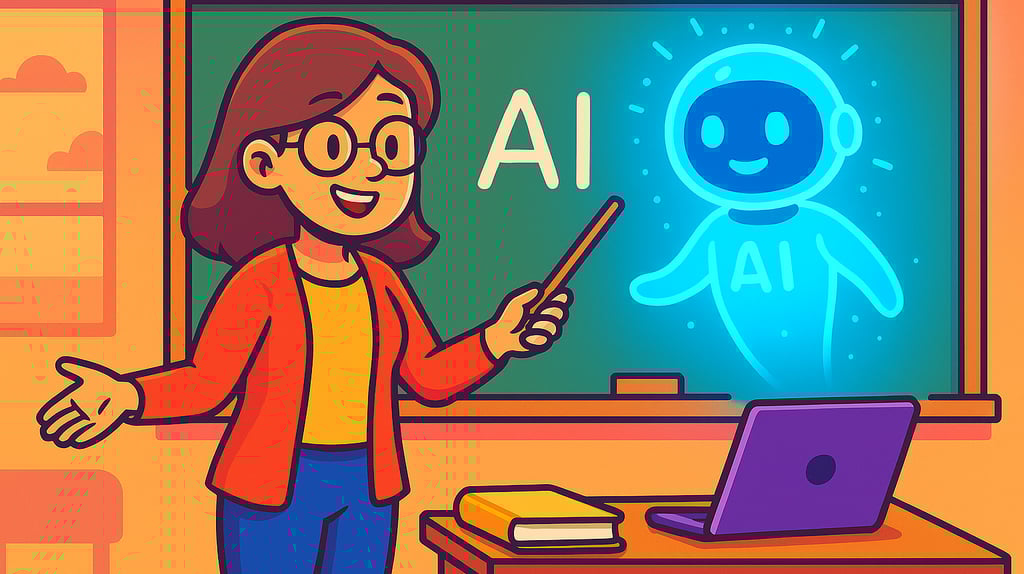
The rapid advancement of artificial intelligence has sparked intense debate about whether technology will eventually replace human educators in our classrooms. As online learning continues to evolve, many wonder if AI tutors and automated systems will make traditional teaching obsolete. Despite AI's impressive capabilities in automating tasks and personalising learning experiences, human teachers remain irreplaceable due to the fundamentally human nature of effective education.
Whilst AI excels at processing information and delivering customised content, teaching extends far beyond mere information transfer. The emotional intelligence, empathy, and complex problem-solving that human educators provide cannot be replicated by algorithms. Research from education leaders consistently shows that 71% of parents, educators, and leaders express concerns about the potential risks of AI in learning environments, highlighting the continued importance of human oversight.
The future of education lies not in replacement, but in collaboration between human teachers and AI technologies. Understanding how AI can enhance rather than eliminate the teaching profession will help you navigate the changing educational landscape. This exploration reveals why human connection remains essential, how AI's limitations affect virtual classrooms, and what this means for ensuring equitable access to quality education for all learners.
Key Reasons AI Won't Replace Human Teachers
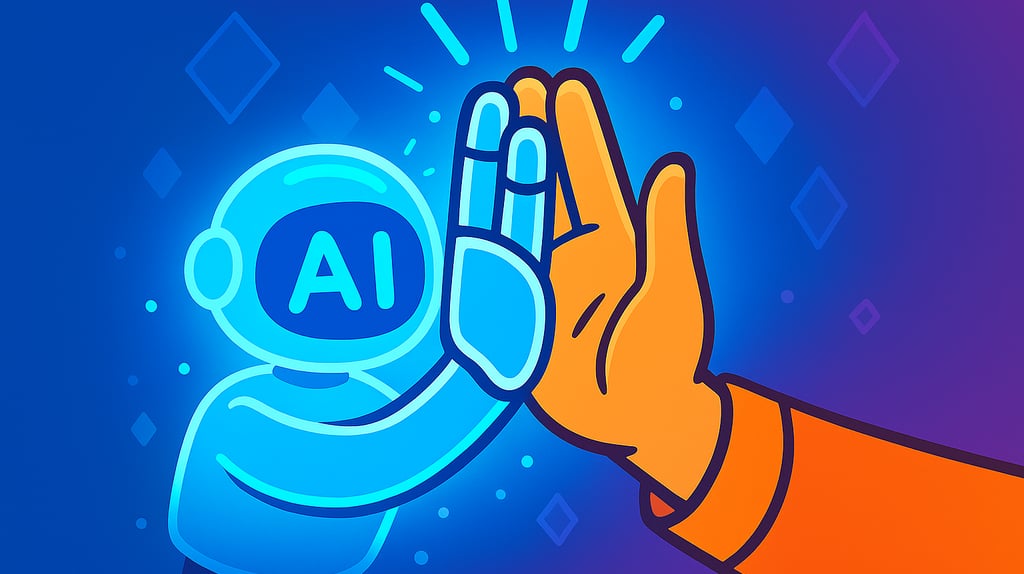
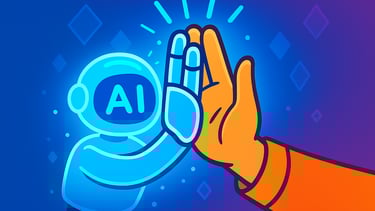
Teaching involves complex human interactions that require emotional understanding, creative problem-solving, and ethical decision-making. These fundamental aspects of education remain beyond the capabilities of artificial intelligence, making human educators irreplaceable in meaningful learning environments.
The Importance of Human Connection in Education
Students thrive when they feel understood and valued by their teachers. This connection forms the foundation of effective learning environments.
Building Trust and Rapport, Teachers establish relationships through shared experiences, personal conversations, and consistent support. You cannot replicate the warmth of a teacher who remembers your interests or celebrates your achievements.
Understanding Individual Needs Human teachers recognise subtle cues that indicate when you're struggling or disengaged. They adapt their approach based on:
Body language and facial expressions
Changes in participation patterns
Personal circumstances affecting learning
Cultural background and individual preferences
Creating Safe Learning Spaces, Teachers foster environments where you feel comfortable making mistakes and asking questions. They understand that learning involves vulnerability and provide the encouragement needed to take intellectual risks.
Motivating Through Relationships The personal connection between teachers and students drives motivation in ways that AI cannot match. When teachers show genuine interest in your progress, it creates accountability and inspiration that transcends mere information delivery.
Emotional Intelligence and Empathy in Teaching
Teaching requires understanding and responding to complex human emotions. These skills remain uniquely human capabilities that artificial intelligence cannot authentically replicate.
Recognising Emotional States: Teachers identify when you're anxious about exams, frustrated with difficult concepts, or excited about discoveries. They adjust their teaching methods accordingly, providing comfort during challenges and amplifying enthusiasm for learning.
Providing Emotional Support Beyond academic instruction, teachers offer guidance during personal difficulties. They understand how external factors affect your learning and provide appropriate support or referrals to additional resources.
Developing Social Skills, Teachers model appropriate emotional responses and help you navigate social interactions. They facilitate discussions about sensitive topics whilst maintaining respectful dialogue.
Responding to Diverse Emotional Needs: Each student processes information and responds to feedback differently. Teachers adapt their communication style based on your emotional temperament and learning preferences.
The Role of Creativity and Adaptability
Human teachers excel at creative problem-solving and spontaneous adaptation. These abilities enable them to address unexpected situations and find innovative teaching approaches.
Innovative Teaching Methods: Teachers develop unique ways to explain complex concepts based on their interests and experiences. They might use analogies, storytelling, or hands-on activities that AI systems cannot spontaneously create.
Adapting to Unexpected Situations When lessons don't proceed as planned, teachers quickly adjust their approach. They recognise when you need additional explanation or different examples to grasp concepts.
Encouraging Creative Thinking, Teachers foster your creativity by asking open-ended questions and encouraging unconventional solutions. They recognise and nurture your unique talents and perspectives.
Addressing the Ethical Dilemmas in Learning
Education involves numerous ethical considerations that require human judgment. Teachers navigate these complex situations whilst maintaining fairness and promoting moral development.
Making Moral Judgements: Teachers address issues like academic dishonesty, bullying, and discrimination. They help you understand consequences whilst teaching ethical behaviour through example and guidance.
Balancing Competing Interests When conflicts arise between students or between academic and personal needs, teachers mediate using wisdom and experience. They consider multiple perspectives before making decisions that affect your well-being.
Promoting Critical Thinking About Ethics: Teachers encourage you to examine moral questions and develop your own ethical framework. They facilitate discussions about controversial topics whilst maintaining neutrality and respect for diverse viewpoints.
AI tools are transforming online education through personalised learning experiences, automated content creation, and intelligent tutoring systems. Current generative AI technologies offer significant benefits while presenting unique challenges that educators must navigate carefully.
How AI Tools Support Teaching and Learning
AI tools enhance online education through personalised learning pathways that adapt to your individual pace and learning style. These systems analyse your performance data to identify knowledge gaps and recommend targeted resources.
Intelligent tutoring systems provide immediate feedback on assignments and assessments. You receive explanations for incorrect answers and guided practice exercises tailored to your specific needs.
AI-powered content creation tools help educators develop interactive materials more efficiently. These platforms can generate quiz questions, create learning modules, and produce multimedia content at scale.
Automated grading systems handle objective assessments, freeing instructors to focus on complex feedback and student interaction. This technology processes large volumes of work quickly whilst maintaining consistency in evaluation standards.
Natural language processing enables AI chatbots to answer common student queries instantly. You can access support outside traditional office hours, reducing response times for basic questions about course content or administrative matters.
Generative AI and Its Current Capabilities
ChatGPT and similar generative AI platforms demonstrate remarkable abilities in natural language processing and content generation. These tools can produce human-like text responses across diverse academic subjects.
Current generative AI excels at essay writing assistance, helping you structure arguments and develop ideas. However, research indicates that students in quantitative fields like computer science use these tools more frequently than those in humanities subjects.
Language translation and adaptation capabilities enable generative AI to support cross-cultural communication in online learning environments. You can access content in multiple languages and receive explanations tailored to your linguistic background.
These technologies can generate practice questions, create study guides, and produce explanatory content on complex topics. They serve as supplementary learning resources rather than primary instruction sources.
Code generation and debugging features particularly benefit programming and technical courses. You can receive syntax suggestions and error explanations to accelerate your learning process.
Benefits and Challenges of AI in Education
Key Benefits:
24/7 availability for student support and assistance
Scalable personalisation across large student populations
Consistent assessment standards through automated grading
Enhanced accessibility for students with diverse learning needs
Primary Challenges:
Academic integrity concerns arise when students rely too heavily on AI for assignment completion. Institutions struggle to establish clear boundaries between acceptable assistance and academic dishonesty.
Technological accessibility remains uneven, creating potential equity gaps between students with different resource levels. Not all learners have equal access to advanced AI tools.
Survey data reveal that less than 25% of teaching staff feel adequately prepared to integrate AI technologies effectively. More than three-quarters of educators request additional support and training.
Data privacy concerns emerge as AI systems collect extensive information about your learning patterns and academic performance. Educational institutions must balance personalisation benefits with privacy protection requirements.
The Role of AI and Generative Technologies in Online Learning


AI systems face fundamental constraints that prevent them from replicating the full spectrum of human teaching capabilities. These technological boundaries become particularly evident in virtual learning environments, where human connection already faces natural challenges.
Understanding the Boundaries of AI Capabilities
AI tools fundamentally operate through statistical probability rather than genuine understanding. They produce responses based on patterns in data, not actual comprehension of concepts or student needs.
Accuracy remains a critical limitation. Studies show AI tools produce factual errors more than half the time. This unreliability requires constant human oversight and fact-checking.
AI cannot truly personalise learning in meaningful ways. Whilst it can adapt to data patterns, it lacks a deep understanding of individual student circumstances, learning styles, or emotional states.
The technology excels at generating text that resembles educational content. However, it cannot construct genuine meaning or ideas - the fundamental building blocks of effective teaching.
Key AI limitations include:
No genuine comprehension of subject matter
Inability to understand context beyond surface patterns
Limited capacity for creative problem-solving
Dependence on existing data rather than innovative thinking
The Unpredictability of Human Interaction
Real teaching moments often arise spontaneously from unexpected questions, discussions, or student revelations. AI systems cannot navigate these unpredictable interactions effectively.
Human empathy remains irreplaceable. Teachers read facial expressions, detect frustration, and provide emotional support during challenging learning moments. AI cannot recognise or respond to these subtle human cues.
Students need mentorship that extends beyond content delivery. They require encouragement, motivation, and someone who believes in their potential during difficult periods.
Virtual classrooms already challenge human connection. Adding AI to replace rather than support teachers further diminishes the personal relationships essential for effective learning.
Critical human elements AI cannot replicate:
Emotional intelligence and empathy
Spontaneous creative responses
Personal encouragement and motivation
Cultural and social understanding
Risks of Over-Reliance on Technology
Heavy dependence on AI tools can diminish students' critical thinking abilities. Research indicates that students using AI tutors may initially show improvement but ultimately develop weaker conceptual understanding.
The "cognitive cost" of AI assistance is real. Studies demonstrate that students who rely on AI for writing tasks show reduced critical thinking skills over time.
Students may become passive recipients of AI-generated content rather than active learners. This creates a dangerous cycle where thinking skills atrophy through disuse.
Technical failures, system outages, or algorithmic bias can disrupt learning entirely. Over-reliance leaves both students and institutions vulnerable to these technological breakdowns.
The human element becomes even more crucial in virtual environments where students already face isolation and reduced social interaction.
The Evolving Role of Teachers in the AI Era
Teachers are transforming from knowledge-holders to learning facilitators, requiring new digital competencies whilst maintaining their essential human connection with students. This shift demands ongoing professional development and strategic collaboration between human expertise and artificial intelligence capabilities.
Modern teachers must develop fluency in AI-powered educational tools and platforms. This includes understanding how machine learning algorithms personalise content and recognising when human intervention improves learning outcomes.
Professional development programmes now focus on AI integration skills rather than basic technology use. Teachers learn to interpret AI-generated analytics about student progress and adapt their instruction accordingly.
Digital literacy extends beyond operating software. Teachers must evaluate AI recommendations critically and understand the limitations of automated systems.
Essential AI competencies for teachers include:
Data interpretation and student analytics
AI tool selection and implementation
Ethical AI use and privacy protection
Balancing automated and human feedback
Training institutions are redesigning curricula to prepare teachers for AI-rich environments. These programmes emphasise collaborative relationships with technology rather than competition.
Guiding Student Growth Beyond Algorithms
AI excels at delivering personalised content but cannot replicate human mentorship and emotional support. Teachers provide the ethical guidance and critical thinking skills that algorithms cannot develop.
Students need human role models to navigate complex social situations and develop empathy. Teachers create safe spaces for questioning, creativity, and intellectual risk-taking that AI systems cannot replicate.
Key human-centred teaching responsibilities:
Emotional intelligence development
Ethics and values formation
Creative problem-solving guidance
Cultural sensitivity and inclusion
Teachers help students interpret AI-generated suggestions and develop healthy relationships with technology. They model appropriate AI use whilst fostering independent thinking skills.
The human element becomes more valuable as AI handles routine tasks. Teachers focus on inspiring curiosity, building confidence, and nurturing individual potential.
Blended Learning: Human and AI Collaboration
Effective AI integration treats technology as a collaborative partner rather than a replacement. Teachers orchestrate learning experiences that combine AI efficiency with human insight.
AI handles data processing, content curation, and initial assessment whilst teachers provide context, meaning, and personalised support. This partnership allows more time for individual student interaction.
Successful collaboration strategies:
AI manages routine administrative tasks
Teachers focus on complex problem-solving
Technology provides real-time progress data
Human educators interpret and act on insights
Teachers maintain control over pedagogical decisions whilst leveraging AI capabilities for enhanced learning outcomes. They determine when human intervention improves upon automated recommendations.
This collaborative approach maximises both technological efficiency and human connection. Teachers become more effective by working with AI rather than against it.
Limitations of AI in the Virtual Classroom
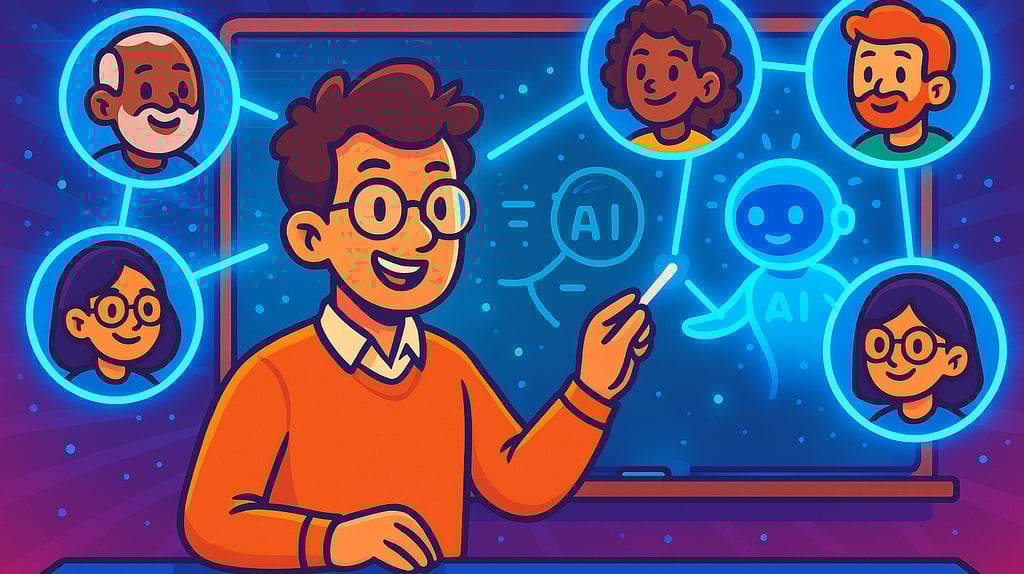
The integration of AI tools in education creates both opportunities and challenges for achieving equal access to quality learning. Addressing the digital divide, maintaining human-centred approaches, and preventing algorithmic bias will determine whether technology serves to democratise education or deepen existing inequalities.
Bridging the Digital Divide
Unequal access to AI-powered educational tools threatens to widen the gap between privileged and disadvantaged learners. Students from low-income families often lack reliable internet connections and modern devices needed for AI-enhanced learning platforms.
Educational institutions must prioritise infrastructure development in underserved communities. This includes providing high-speed internet access and ensuring schools have adequate technology resources.
Key strategies for bridging the divide:
Subsidised device programmes for disadvantaged students
Community learning centres with AI-enabled tools
Offline capabilities for educational AI applications
Teacher training in schools with limited resources
Government investment in digital infrastructure becomes crucial as the future of education increasingly relies on technology. Without deliberate action, AI tools risk becoming privileges rather than universal educational resources.
Safeguarding Human-Centred Education
Whilst AI enhances personalised learning and accessibility, educational systems must maintain a human connection at their core. The most effective approach balances AI integration with human-centred pedagogical strategies.
Teachers remain essential for emotional support, critical thinking development, and social interaction. AI tools should augment rather than replace these fundamental human elements of education.
Your institution should implement AI as a supportive tool rather than a replacement for human instruction. This preserves the mentorship, empathy, and complex reasoning that only human teachers provide.
Evidence-based recommendations include:
Maintaining teacher-led classroom discussions
Using AI for administrative tasks rather than primary instruction
Ensuring human oversight of AI-generated content
Preserving opportunities for peer collaboration
Mitigating Bias and Inequality in AI Systems
AI systems in education can perpetuate existing biases and create new forms of inequality. Algorithms may disadvantage certain demographic groups through biased training data or flawed programming.
Content accuracy issues and limited collaboration features in AI tools can hinder learning outcomes for specific student populations. Regular auditing of AI systems helps identify and address these problems.
Critical measures for bias prevention:
Data Collection needs to ensure diverse, representative training datasets
Algorithm Testing needs regular bias audits across demographic groups
Content Review needs human verification of AI-generated materials
Access Monitoring needs to track usage patterns across different student populations
Educational leaders must establish oversight mechanisms to monitor AI performance across diverse student groups. This includes collecting feedback from underrepresented communities and adjusting systems accordingly.
Transparency in AI decision-making processes allows educators to identify when technology might disadvantage certain students. Your educational institution should maintain clear policies for AI use that prioritise equity outcomes.
Ensuring Equity and Access in the Future of Education
Artificial intelligence will continue reshaping the way we learn, but it cannot replace the essence of human teaching. Education is more than the transfer of information; it’s about trust, empathy, creativity, and guidance through life’s uncertainties. These qualities remain uniquely human and form the backbone of meaningful learning.
The future of online education lies in partnership, not replacement. AI can automate routine tasks, personalise study materials, and expand access to knowledge, but teachers provide the human connection that inspires growth, resilience, and ethical thinking. By embracing this collaboration, we can create a learning environment where technology enhances rather than diminishes the role of educators.
For students, parents, and lifelong learners alike, the message is clear: invest in AI as a supportive tool, but never lose sight of the teachers who shape not just what we learn, but who we become. The classrooms of tomorrow will be most effective when powered by both the efficiency of AI and the irreplaceable humanity of great teachers.
Conclusion
Detailed Role Guides: Quick Links →
Learning Platforms: Quick Links →
Old School Learning: Quick Links →